
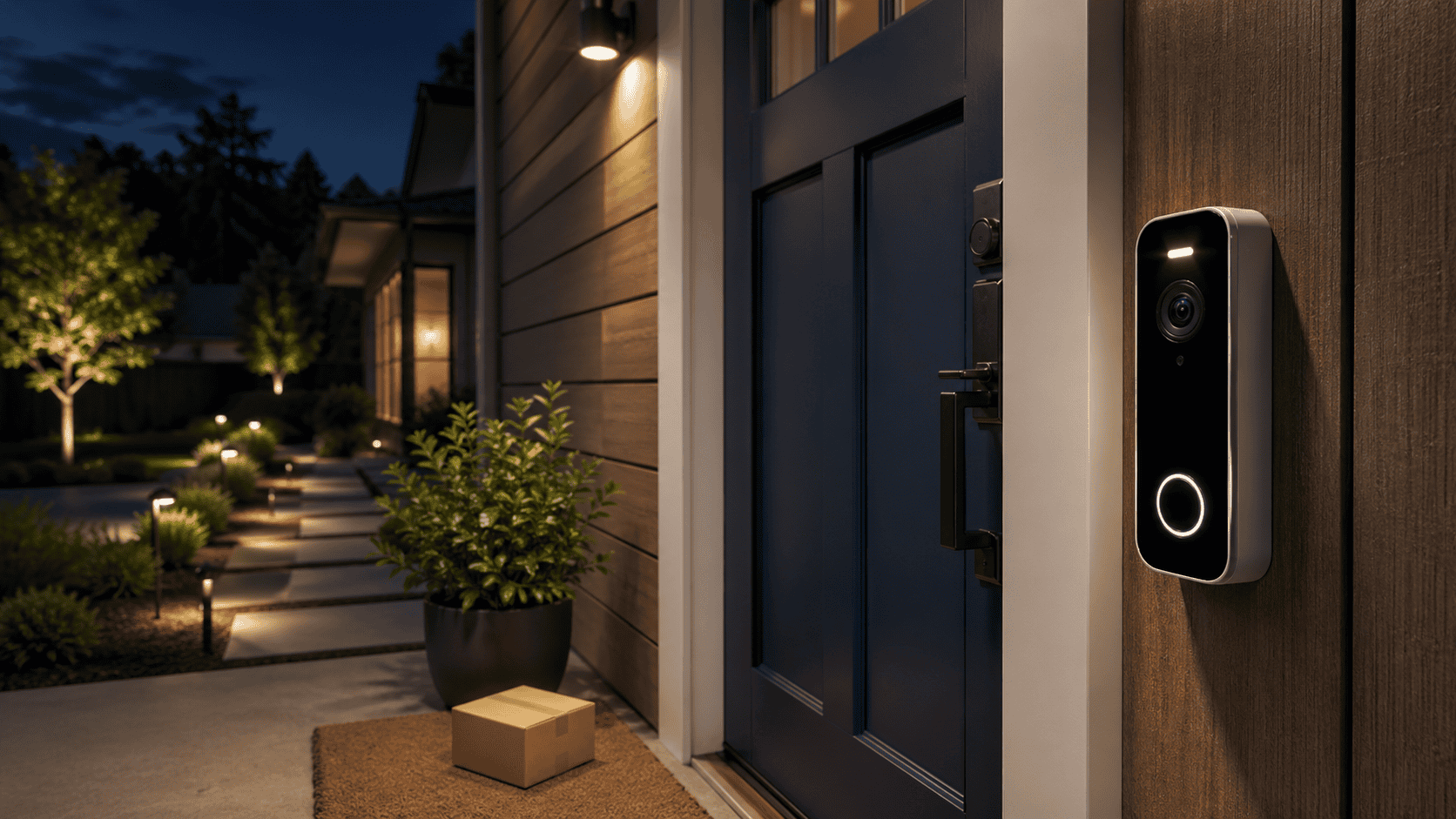
Most doorbell cameras produce black and white footage after dark. That grayscale image tells you someone is at your door, but it tells you very little else. The color of a jacket, the markings on a vehicle, the face of a visitor in low light — all of that information collapses into shades of gray the moment infrared night vision takes over. Color night vision changes that, and the cameras that do it well have become a meaningful category worth buying deliberately rather than accidentally.
This guide covers how color night vision actually works, what distinguishes a camera with genuine low-light color performance from one that simply has a spotlight bolted on, and the five doorbell cameras that handle it best in 2026.
How Color Night Vision Works
The term color night vision covers two different technologies that produce very different results, and understanding the distinction will help you evaluate marketing claims accurately.
The first approach is spotlight-assisted color. The camera has one or more built-in LED spotlights that activate at night, flooding the scene with white or warm-toned light. The camera then captures full-color video using that artificial illumination, much like a floodlight camera would. This method produces vivid, detailed color footage and is the most common implementation in doorbell cameras. The trade-off is that the spotlight is visible and can be startling to visitors, and in some installations it can wash out detail if the subject is too close to the lens.
The second approach is passive color or starlight sensing, where the camera uses a highly sensitive image sensor with a larger aperture and optimized pixel processing to extract color information from ambient light alone, without activating a spotlight. This produces a softer, more natural-looking image in partial darkness, such as a porch with a light on or a well-lit street. In near-total darkness, however, passive color sensors will revert to infrared black and white because there simply is not enough light to work with.
Many cameras combine both methods: they use a sensitive sensor for passive color when ambient light is present, and activate a spotlight in full darkness as a fallback. Cameras with this hybrid approach tend to deliver the most consistent color performance across different lighting conditions.
One more thing worth knowing: color night vision requires light, artificial or ambient. No sensor technology produces color in complete darkness. When you see claims of color night vision with no mention of how it is produced, assume it requires a spotlight to function.
What to Look For
A few specific factors separate genuinely useful color night vision from the kind that looks impressive in a product demo but disappoints in the field.
Spotlight range matters more than it may seem. A spotlight that illuminates two feet in front of the door is useful for confirming who rang the bell, but it will not capture a person walking up the path or a vehicle in the driveway. Look for spotlights with a stated range of at least ten feet, and treat claims beyond twenty feet for a doorbell camera with skepticism.
Spotlight control is worth checking before you buy. Some cameras give you the option to keep the spotlight off by default and only activate it when motion is detected, which reduces annoyance for visitors and neighbors. Others only offer always-on or always-motion-triggered modes with no manual override. If your front door faces a neighbor’s window or a busy sidewalk, that distinction matters.
Color accuracy under spotlight illumination is not equal across cameras. Some produce footage with a warm orange cast from LED color temperature, while others deliver more neutral white light that makes color identification easier. Review footage samples from real-world tests before buying if this level of detail matters to you.
The Best Doorbell Cameras with Color Night Vision
Five cameras stand out for color night vision performance in 2026. They span a range of price points, power options, and storage models, but all deliver reliable color footage after dark through verified testing.
Eufy Video Doorbell E340: Best Overall
The Eufy E340 at $149.99 is the strongest all-around color night vision doorbell available in 2026. It uses dual spotlights alongside its dual-camera setup, one main camera for face-level viewing and one downward-angled camera for package detection, and both cameras produce full color video after dark. Homes and Gardens tested it for five months and called the nighttime visibility a significant improvement over standard infrared cameras, noting that faces are clearly recognizable even on dark nights.
The E340 stores video locally on 8GB of built-in memory with no subscription required, which is enough for roughly 90 days of normal event-based recording. An optional HomeBase hub upgrades that to 16GB, and the HomeBase 3 supports expandable storage up to 16TB via an external hard drive for buyers who want a comprehensive local archive. Eufy’s optional cloud storage starts at $3 per month but is not needed for full functionality.
AI detection for people, packages, vehicles, and facial recognition all run on-device without a fee. The camera works with Alexa and Google Assistant but not Apple HomeKit, and operates on either battery or existing doorbell wiring. The one honest limitation noted across multiple real-world reviews is occasional battery drain that falls short of the stated six-month estimate in high-traffic installations. In wired mode, that concern disappears entirely.
TP-Link Tapo D225 and TD25: Best Value
The Tapo D225 and its Best Buy exclusive sibling, the TD25, are the strongest value pick in this roundup. The D225 costs around $80 to $90 and the TD25 runs about $20 more with a slightly higher 5-megapixel sensor versus the D225’s 4 megapixels. Both deliver built-in spotlight color night vision, a 180-degree head-to-toe field of view, 2K QHD resolution, and free AI detection for people, packages, and vehicles, all without any subscription required.
Both models support up to 512GB of local microSD storage at no ongoing cost, and are compatible with Alexa and Google Assistant. Battery life is rated up to eight months on a single charge in wire-free mode, which is among the highest in the category. Hardwired mode enables 24/7 continuous recording. The cameras also include pre-roll, capturing up to four extra seconds of footage before motion is detected, which helps with context on what triggered an alert.
Consumer Reports tested the D225 and rated it highly for response time and smart features. Real-world buyers highlight fast app connection speeds compared to Ring and Eufy, noting noticeably less lag from doorbell press to live view. The trade-off is that both cameras are bulkier than competing models, which some buyers find visually prominent on a door frame. Neither supports Apple HomeKit.
Eufy Video Doorbell C31: Best Budget Color Night Vision
At $99.99, the Eufy C31 is the most affordable camera in this roundup with genuine color night vision. It uses a built-in spotlight for after-dark color, records in 2K, and stores footage locally on a microSD card up to 128GB with no subscription required. Consumer Reports rated it favorably for video quality, data security, and response time in its 2026 testing.
The C31 is a single-camera model without the dual-lens package detection of the E340, and color night vision range is more modest than the higher-end options in this guide. For buyers whose primary interest is seeing visitor faces clearly at night rather than comprehensive porch surveillance, it covers the core need at a lower price. It works with Alexa and Google Assistant, supports both battery and wired power, and is one of the cleanest no-subscription setups available.
Logitech Circle View Doorbell: Best for Apple HomeKit
The Logitech Circle View Wired Doorbell costs around $150 and is the best option for Apple households that want color night vision. It uses a 4000K LED light strip for color-assisted night vision, recording in 1080p HDR with a 160-degree field of view. Consumer Reports and Security.org both note that the night vision implementation produces quality color footage in real-world conditions, with the LED strip providing a consistent, less aggressive light than a directional spotlight.
The Circle View integrates natively with Apple HomeKit Secure Video, which stores encrypted footage directly in iCloud with end-to-end encryption that Apple cannot access even under subpoena. Storage costs depend on your existing iCloud plan: 50GB at $1 per month covers one camera, 200GB at $3 per month covers up to five cameras. If you already pay for iCloud storage for other purposes, the security camera storage may be included at no additional cost.
The significant limitation is that the Circle View is wired only, requiring existing low-voltage doorbell wiring for power. It also does not work with Android devices, and integration outside the Apple ecosystem is essentially absent. For iPhone and iPad households already using HomeKit, those constraints are unlikely to matter. For everyone else, the Eufy or Tapo options are more practical.
Wyze Video Doorbell Pro: Best Budget Option with Starlight Color
The Wyze Video Doorbell Pro at $89.98 takes a different approach to color night vision than the other cameras in this guide. Rather than relying primarily on a spotlight, it uses a Starlight CMOS sensor optimized for low-light passive color capture. In ambient lighting conditions such as a lit porch, a streetlight, or a neighbor’s exterior lights, it produces color footage without activating any additional illumination.
In genuine darkness, the camera does fall back to infrared black and white, as all passive-color sensors do without a light source. But in the partially lit conditions that cover the majority of real-world front door environments, the Starlight sensor delivers natural-looking color imagery at a price that undercuts nearly every other camera with color capabilities.
The Wyze Pro records in 1440p with a 1:1 aspect ratio, includes a chime in the box, and offers free AI person detection. It works with Alexa and Google Assistant. The same security concerns noted in previous articles apply here: Wyze had a documented vulnerability disclosure issue in 2022, since addressed, but privacy-focused buyers should factor that history into their decision.
A Note on Infrared Night Vision Cameras
Not every camera in a buyer’s shortlist will have color night vision, and that is not automatically a disqualifying flaw. Standard infrared night vision produces clear, high-contrast black and white footage that is often better at identifying motion in total darkness than a spotlight-assisted color camera, because the IR LEDs illuminate the scene without affecting the ambient environment.
If your primary concern is detecting motion and capturing evidence of who approached your door, an infrared camera may serve you just as well. Where color night vision provides meaningful advantage is in situations where you need to describe what you saw: the color of a vehicle, clothing, or an object that distinguishes one person from another. For those use cases, the cameras above are worth the additional cost.
The Bottom Line
The Eufy E340 is the right choice for most buyers who want the best color night vision performance and are comfortable with the price. For buyers watching the budget, the TP-Link Tapo D225 or TD25 delivers comparable spotlight-assisted color at a significantly lower cost with no subscription required. The Logitech Circle View is the only credible option for Apple HomeKit households. The Eufy C31 handles the budget end of the color night vision market cleanly. And the Wyze Video Doorbell Pro is the best choice for buyers who want natural ambient-light color rather than spotlight-assisted footage.
