
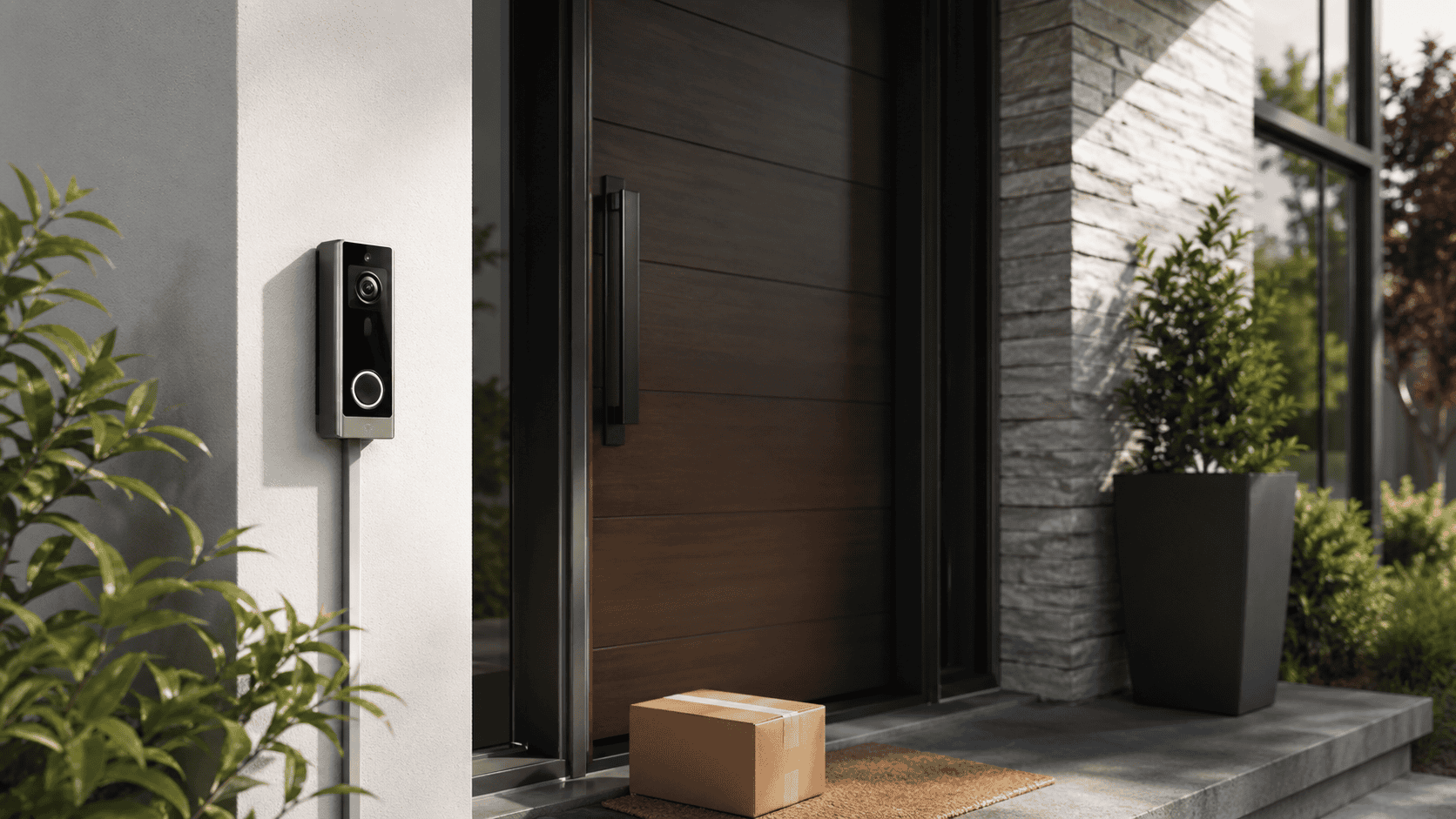
A wired doorbell camera does something no battery model can: it stays on. There is no recharging window, no seasonal battery degradation in the cold, and no gap in coverage while the unit sits on a charger. For homes that already have low-voltage doorbell wiring, going wired is the natural choice, and the camera options available in 2026 are the best they have ever been.
The trade-off is that wired cameras require more from the installation. You need a working 16 to 24V AC doorbell transformer, a chime setup that is compatible with the camera you choose, and a willingness to handle basic electrical connections. None of this is difficult, but it is a prerequisite. If your home has a functional doorbell today, that infrastructure is already in place.
This guide covers the five best wired doorbell cameras in 2026, what each does well, where each one falls short, and how to think about the installation before you buy.
Who Should Buy a Wired Doorbell Camera
Wired doorbell cameras make the most sense for homeowners who want set-it-and-forget-it reliability. Once installed, they require no maintenance beyond the occasional lens wipe. They also unlock features that battery models handle inconsistently or not at all: 24/7 continuous recording, pre-roll buffering that captures a few seconds of footage before motion is detected, and uninterrupted operation through weather extremes that would drain a battery in days.
If your home does not have existing doorbell wiring, that is not necessarily disqualifying. Running new wire is a project that costs between $100 and $300 with a licensed electrician, and some wired cameras can also be powered by a low-voltage plug-in adapter, which eliminates the wiring requirement entirely while retaining continuous power.
Battery-powered models make more sense for renters, for homes without wiring, and for buyers who want a faster DIY install. For everyone else, wired is worth the extra setup time.
The Top Picks for Wired Doorbell Cameras
Five cameras define the 2026 wired category across different price points, ecosystems, and storage approaches. The right choice depends as much on which smart home platform you use and how you feel about subscriptions as it does on the hardware itself.
Google Nest Doorbell Wired (3rd Gen): Best Overall
The third-generation Nest Doorbell Wired retails at $180 and represents the strongest all-around option for most buyers in 2026. It records in 2K HDR with a 3:4 portrait aspect ratio that captures visitors from head to toe, including packages left on the ground. The 166-degree diagonal field of view is among the widest in the category. Night vision reaches up to 10 feet via six infrared LEDs, and the camera is IP65 rated for weather and dust resistance.
On-device AI detection for people, packages, vehicles, and animals runs without a subscription, which means useful alerts without a monthly fee. The camera provides three hours of free rolling event-based cloud storage at no cost, enough for most households to review the day’s activity. Google Home Premium, at $10 per month, extends storage to 30 days and unlocks Gemini-powered features including natural language video search and facial recognition. A one-month trial of the Premium tier is included with the camera.
Wirecutter named this model its top-rated doorbell in 2026, citing detection accuracy as the strongest in the category. The primary limitation is ecosystem lock-in: the Nest Doorbell integrates exclusively with Google Home and Google Assistant. It is not compatible with Apple HomeKit, and native Alexa integration is limited to notifications on Echo devices rather than full camera feed support. For Google Home households, this is the clear recommendation. For everyone else, the other options below deserve attention.
Ring Wired Doorbell Pro (3rd Gen): Best Video Quality
The Ring Wired Doorbell Pro 3rd Gen costs $249.99 and is the highest-resolution wired doorbell on the mainstream market in 2026. Ring calls the sensor Retinal 4K, and the practical result is footage sharp enough to zoom in up to 10x and still read package labels or identify faces at the far edge of the porch. Radar-powered 3D Motion Detection is more precise than standard PIR sensors, mapping motion zones with enough granularity to trigger on a person in the driveway while ignoring traffic on the street.
Color pre-roll captures a few seconds of footage before motion fully triggers, which is particularly useful when something activates the camera but moves through the frame quickly. The Ring app is one of the more polished in the category, and integration with Ring Alarm, Ring Floodlights, and the broader Ring ecosystem is seamless for buyers already invested in that platform.
The significant limitation is that no footage is stored locally. Recording requires the Ring Basic plan at $4.99 per month, and the AI-powered features, extended storage, and Video Descriptions all require higher tiers. Over two years, subscription costs add meaningfully to the total investment. For buyers who already pay for a Ring plan or who prioritize outright video quality above everything else, this is the best wired camera available. For buyers who want to minimize ongoing fees, the Reolink or Lorex options below are more practical.
Reolink Video Doorbell WiFi: Best for Local Storage
The Reolink Video Doorbell WiFi sits in the $80 to $100 range and makes a compelling case for buyers who want to avoid cloud subscriptions entirely. It records at 2560 x 1920 (5 megapixels) with a 180-degree diagonal field of view, which is the widest coverage of any camera in this roundup. A microSD card slot supports up to 256GB of local storage, and the camera is also compatible with Reolink NVR systems for buyers who want centralized multi-camera recording.
No subscription is required for any core feature. Person detection, motion zones, two-way audio, and local recording all work out of the box. A free basic cloud tier provides seven days of storage for a single camera; paid cloud plans start at $6.99 per month for expanded history and additional cameras, but neither is necessary for full functionality.
One practical note: the Reolink does not support existing mechanical chimes, which differs from the Nest and Ring models. A wireless digital chime module is included in the box and plugs into a standard outlet. Buyers who want to preserve their existing chime setup should factor this in. The camera supports Google Home and Alexa, but not Apple HomeKit. For buyers who prioritize local storage, wide coverage, and no mandatory fees, the Reolink is the strongest value in the wired category.
Lorex 2K QHD Wired Doorbell: Best for Privacy
The Lorex 2K QHD Wired Doorbell costs around $180 and is built for buyers who want comprehensive local storage and no dependency on cloud services or ecosystems. It records in 2K resolution with color night vision, includes a microSD card slot for onboard storage, and requires no subscription for any feature. SafeHome.org gave it a SecureScore of 9.1/10 following four weeks of hands-on testing.
The Lorex operates as a standalone device with no integration with Alexa, Google Home, or Apple HomeKit. For buyers who find smart home ecosystems and cloud platforms more concerning than convenient, that independence is a feature rather than a limitation. Video stays on the camera, on your terms, without any third-party involvement unless you specifically opt into Lorex’s optional cloud plans.
Installation is more involved than the Nest or Ring. Reviewers consistently note that the wiring process requires careful attention to the included documentation, and the hardware does not always snap into place as cleanly as competing models. Budget an hour rather than fifteen minutes, and watch the official installation video before starting. The app experience has received mixed feedback on Android, with limited options for exporting and downloading recorded footage compared to iOS. These are real friction points, but they do not undermine the camera’s core value for privacy-focused buyers who want simple, reliable local recording.
Wyze Video Doorbell V2: Best Budget Wired Option
At under $60, the Wyze Video Doorbell V2 is the least expensive capable wired doorbell in 2026. It records in 2K, features a 3:4 portrait aspect ratio for head-to-toe coverage, and includes color night vision via a Starlight CMOS sensor. It works with Alexa and Google Assistant and requires existing 16 to 24V doorbell wiring for power.
Free basic functionality includes live view, two-way audio, and motion alerts. Smart alerts that identify people, pets, packages, and vehicles require the Cam Plus subscription at $2.99 per month per camera. Without it, notifications are motion-triggered without classification. For buyers who want to minimize recurring costs, the camera performs adequately on free-tier alerts alone.
The limitations at this price point are real. The Wyze platform has a documented history of security issues, including a 2022 vulnerability disclosure that was not addressed promptly, and privacy-conscious buyers should weigh that before purchasing. The app and hardware quality reflect the budget price. That said, for buyers who want the reliability of wired power and the lowest possible upfront cost, the Wyze V2 is a reasonable entry point.
What to Check Before Installing a Wired Doorbell
Before ordering any wired doorbell, three things are worth verifying at your front door.
First, confirm your transformer is compatible. Most North American homes built after 1950 have a doorbell transformer rated at 16 to 24V AC, which is what all five cameras above require. Older homes sometimes have underpowered transformers that work with a simple chime but cannot drive a camera. If you are unsure, a multimeter test at the transformer takes about two minutes. Underpowered transformers need to be replaced before installation, which is a straightforward and inexpensive fix.
Second, check your chime type. The Nest and Ring both include chime kits and support existing mechanical chimes. The Reolink uses a wireless digital chime and bypasses your existing mechanical setup. The Lorex and Wyze work with standard chime configurations. If keeping your existing chime is important, eliminate the Reolink from consideration or plan on running both the digital chime and the original unit in different zones of the house.
Third, consider Wi-Fi signal strength at your front door. Wired cameras solve the power problem but still transmit video over Wi-Fi. A weak signal at the mount point means delayed notifications, dropped live view sessions, and degraded video quality regardless of how good the camera hardware is. If your router is on the opposite side of the house from your front door, a Wi-Fi extender or mesh node placed near the entryway is worth adding to the project.
The Bottom Line
For most homeowners who use Google Home or want the best motion detection accuracy available, the Google Nest Doorbell Wired 3rd Gen at $180 is the right choice. It delivers strong performance, meaningful free features, and best-in-class AI detection without requiring a subscription for basic operation.
The Ring Wired Doorbell Pro 3rd Gen at $250 is the right call for buyers who prioritize outright video quality or who are already paying for a Ring subscription. The Reolink is the best option for anyone committed to local storage and subscription-free operation. The Lorex serves buyers who want maximum independence from cloud platforms. And the Wyze V2 is the practical choice when budget is the primary constraint.
