
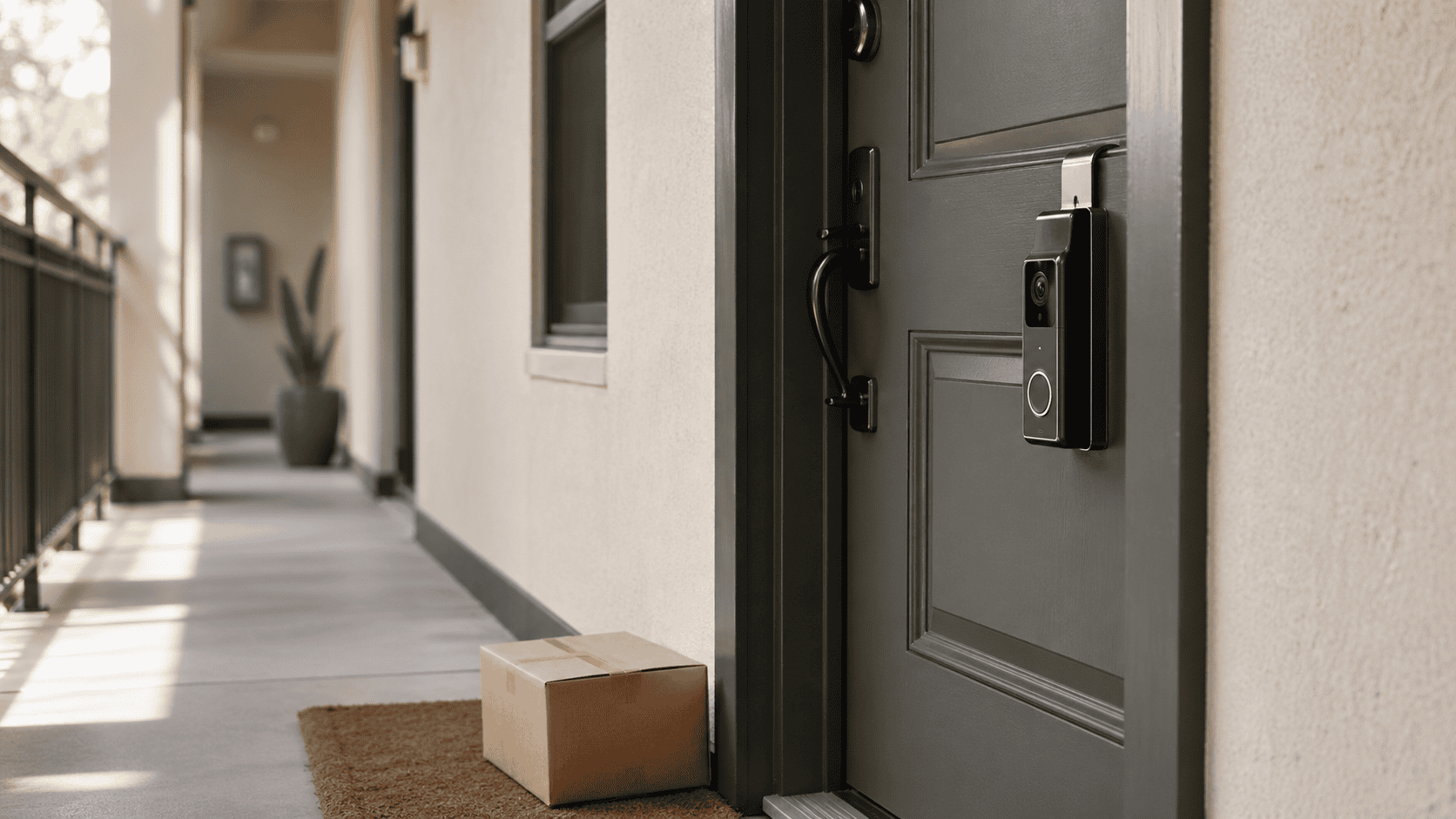
Apartments come with a set of constraints that most doorbell camera guides simply ignore. You cannot always drill into a door frame. You probably do not have existing doorbell wiring. Your hallway is shared space, which raises privacy concerns for neighbors directly across from you. And whatever you install needs to come out cleanly when you move.
The good news is that the market has caught up with renters. Battery-powered doorbell cameras with no-drill mounting options are now mainstream, several perform at the same level as wired models, and the best ones can be removed and reinstalled in a new apartment in under twenty minutes. This guide covers what actually matters for apartment buyers, the installation realities you should know before purchasing, and the specific models worth considering in 2026.
What Makes an Apartment Different
Before getting into product recommendations, it is worth understanding the unique factors that shape the decision for renters.
The most important is power. Apartments typically do not have the low-voltage doorbell wiring that hardwired cameras require. Unless your unit has a traditional doorbell button already installed and working, assume you need a battery-powered model. Most hardwired cameras need a 16 to 24V AC transformer, and connecting to building electrical systems without landlord approval is the kind of thing that jeopardizes deposits and leases.
Installation method matters more than most buyers expect. Wall-mounted cameras require drilling, which most leases restrict under alteration clauses. Battery-powered cameras with adhesive mounts, over-the-door hanging brackets, or doorframe clip systems avoid this entirely. These options remove cleanly and leave no marks, which means no deposit deductions and no awkward conversations with property management.
The shared hallway is a real consideration. Apartment doors typically face other units directly across a narrow corridor. A doorbell camera with a wide-angle lens pointed straight ahead can capture your neighbor’s door, their comings and goings, and potentially their interior when they open their door. Some cameras include angled mounting wedges to point the lens downward and reduce this coverage. Even where it is not legally required, it is worth considering.
Finally, leases vary. Some explicitly prohibit security cameras. Some prohibit modifications to door frames. Some are silent on the matter entirely. Reading your lease before purchasing and getting any permission in writing will save headaches later. If your building has an HOA or property management company, the same applies to their rules.
The Top Picks for Apartments
Four cameras stand out for apartment use in 2026. Each is battery-powered or wiring-optional, mounts without permanent modifications, and covers a different combination of budget, smart home ecosystem, and storage preference.
Arlo Video Doorbell HD (2nd Gen): Best Overall for Renters
The Arlo HD 2nd Gen sits at roughly $35 to $50 depending on where you buy it, making it the most accessible capable option in this roundup. It runs entirely on battery, mounts with minimal hardware, and supports all three major smart home ecosystems including Apple HomeKit, something almost no other doorbell in this price range can claim. For renters who are uncertain which smart home platform they will use long-term, that universal compatibility is genuinely useful.
Video is 1080p, which is a step below the 1440p that more expensive models offer. Night vision produces black and white footage via infrared rather than the color images that higher-end cameras provide. These are real limitations that match the price, not the camera failing to perform its job. For alerting you to front-door activity and letting you see and speak to whoever is there, it works reliably.
The significant trade-off is storage. This is the only major battery doorbell that does not support a microSD card, which means recorded video requires the Arlo Secure subscription at $7.99 per month. Live viewing is free, but if you want to check footage from earlier in the day, a subscription is necessary. For renters focused on live monitoring and real-time alerts rather than a recorded archive, this cost may be acceptable. For those who want stored history without a monthly fee, the Eufy C31 below is a better fit.
Eufy Video Doorbell C31: Best for No Monthly Fees
At $99.99, the Eufy C31 is the strongest no-subscription option for apartment dwellers who can work with either battery power or existing wiring. It records in 2K resolution, includes a microSD card slot supporting up to 128GB of local storage, and provides person and motion detection at no ongoing cost. Consumer Reports rated it highly on video quality, response time, and data security.
The practical advantage for apartment renters is that footage stays on the device, not in the cloud. There are no monthly fees, no service cancellations to worry about, and no concern about a company changing their storage terms mid-lease. The camera works with Alexa and Google Assistant but not Apple HomeKit.
The mounting situation deserves attention. The C31 offers both battery and wired power, but the most practical apartment install is battery mode with a compatible no-drill bracket. Eufy sells a renter-friendly mounting kit separately, and third-party over-the-door brackets from brands like Wasserstein are widely compatible. Check compatibility before purchasing rather than assuming a bracket will fit.
Ring Battery Doorbell Plus: Best Ecosystem Integration
The Ring Battery Doorbell Plus runs around $80 to $100 and is a strong choice for renters already using Ring or Amazon Alexa products. It mounts on battery power, installs in fifteen minutes with basic hardware, and integrates tightly with the broader Ring ecosystem including Ring Alarm systems and the Neighbors community app.
Video quality is solid at 1536 x 1536 in a head-to-toe portrait format, and the color pre-roll feature captures a few seconds of footage before motion is fully detected, which can make a real difference in identifying what triggered an alert. The Ring app is widely regarded as one of the more polished in the category.
Ring’s subscription structure requires the Basic plan at $4.99 per month to access stored video history, which is an ongoing cost to factor in. The plan also adds package detection alerts. Without the subscription, you get live view and real-time notifications but no saved recordings. For renters comfortable with that trade-off, the Ring platform’s reliability and polish make it a compelling choice.
Wyze Video Doorbell Pro: Best Value If You Have Existing Wiring
The Wyze Video Doorbell Pro at $89.98 is the right pick for renters who happen to have a working doorbell wiring setup in their unit, which is more common in older apartment buildings, garden-style units, and townhomes. It records in 1440p with a square aspect ratio that captures visitors head to toe, ships with a chime included, and offers free AI person detection with no subscription required.
For apartments without existing wiring, the battery version of the Wyze doorbell (separate model, under $70) is the appropriate alternative. It uses battery power with IP65 weather resistance and up to six months of claimed battery life under normal use.
Both models work with Alexa and Google Assistant. Neither supports Apple HomeKit. The Wyze platform has faced past security scrutiny, including a vulnerability disclosure issue in 2022 that has since been addressed, but privacy-focused buyers should factor that history into their decision.
What to Know About Mounting Without Drilling
No-drill mounting for apartment doorbell cameras comes in three main forms, each with trade-offs.
Adhesive mounts attach directly to the door frame or wall using industrial-strength tape. They hold well on smooth painted surfaces, come off cleanly if removed properly, and are genuinely damage-free in most cases. The limitation is that adhesive performance degrades in extreme temperatures, which matters in unheated building entryways in cold climates. Cold reduces battery efficiency as well, a double concern for battery-powered cameras.
Over-the-door hanging brackets hook over the top of the door and hold the camera at the correct height without touching the wall or frame at all. These are the most lease-safe option because they require no adhesive and leave absolutely no marks. The potential downside is that opening and closing the door repeatedly can cause slight vibration, which some users find creates blurry footage or triggers unnecessary motion alerts.
Doorframe clip systems grip the door frame from two sides and are held in place by tension rather than adhesive or fasteners. They are stable, removable, and compatible with a range of door frame widths. They are also the least commonly included in the box, so expect to purchase one separately if this is the method you prefer.
One important angle adjustment note: at apartment hallway height, a camera mounted at door frame level and pointed straight forward will capture the door across the hall. Many brackets include a wedge or tilt adjustment that angles the lens downward five to ten degrees. Using this significantly reduces shared space recording and addresses the neighbor privacy concern without meaningfully reducing your own view of visitors.
Privacy Considerations in Apartment Buildings
Recording your own door is generally permissible, but the shared nature of apartment hallways creates real gray areas. Most jurisdictions treat interior building hallways as semi-public spaces, meaning footage captured there is not automatically a privacy violation. That said, local laws vary, and some leases include provisions restricting recording of common areas.
The practical approach is to angle your camera downward using a wedge mount so it focuses on the area directly in front of your door rather than the full corridor. This also limits inadvertent audio capture of neighbors’ conversations in the hallway, which is a separate legal consideration in two-party consent states.
If you are in a building where units face each other at close range, getting landlord permission in writing before installing is the cleanest path. It protects you if a neighbor complains and demonstrates good faith. Most landlords will approve a battery-powered, no-drill doorbell camera when asked directly, especially when compared to the alternative of a tenant installing something without asking.
The Bottom Line
For most apartment renters, the Arlo Video Doorbell HD 2nd Gen is the right starting point given its price, universal smart home compatibility, and battery-only operation. If avoiding subscription fees is the priority, the Eufy C31 is a better long-term value despite the higher upfront cost. Ring Battery Doorbell Plus makes the most sense for anyone already embedded in the Amazon ecosystem. And if your unit has existing doorbell wiring, the Wyze Video Doorbell Pro punches above its price in features.
In every case, verify your mounting approach before the camera arrives. A no-drill bracket that fits cleanly and removes without damage is just as important as any camera spec when you are renting.
