
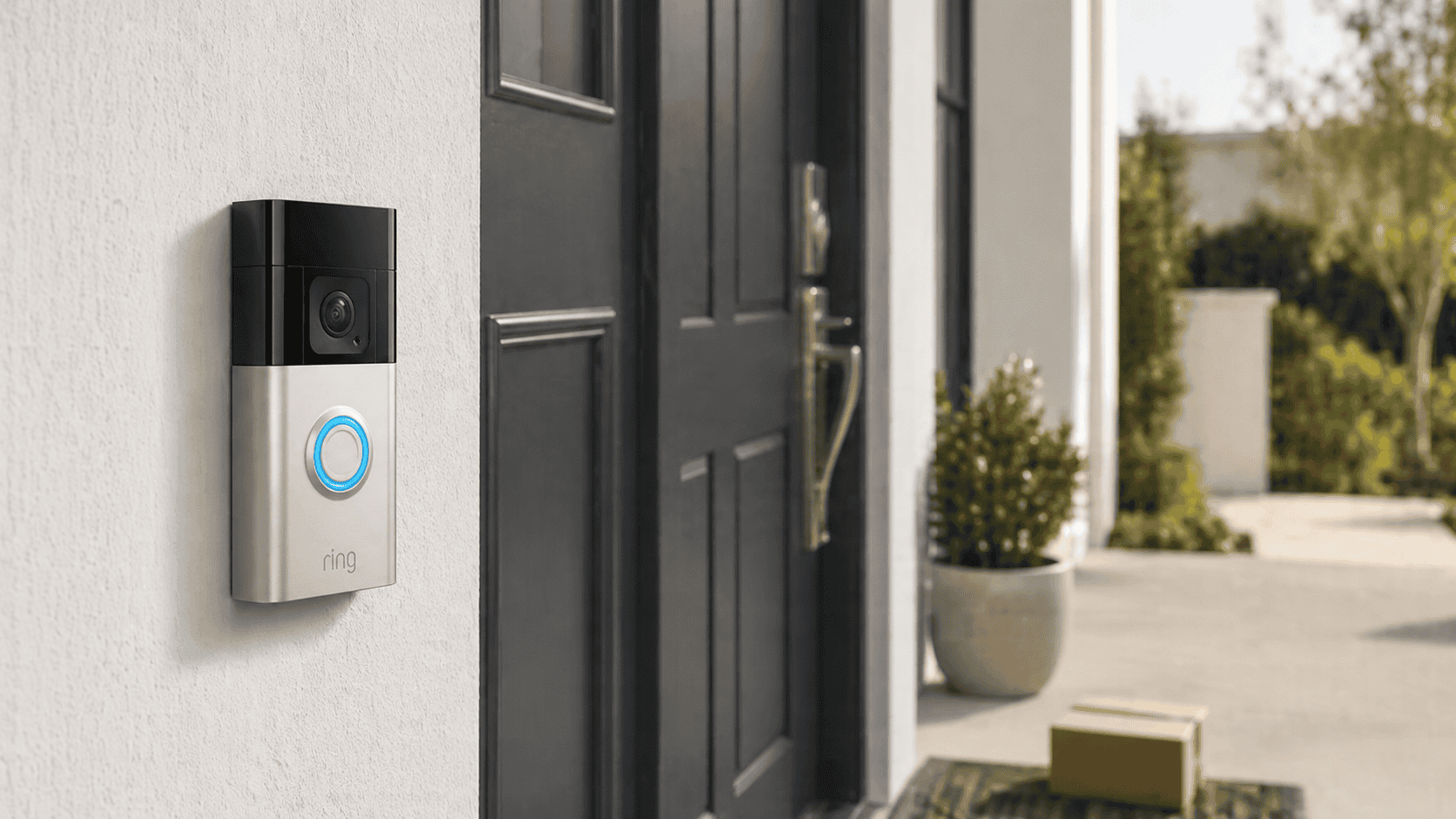
The Ring Video Doorbell 2nd Gen was Ring’s entry-level battery-powered doorbell from 2020 until it was discontinued in late 2024. Ring replaced it with the Ring Battery Doorbell, which improved on the 2nd Gen in several meaningful ways. The original model is no longer sold new through Ring directly, but it continues to appear through third-party retailers, refurbished sellers, and secondhand markets — often at prices well below its original $99.99.
If you are considering the Ring Video Doorbell 2nd Gen in 2026, the question is not whether it was a good camera when it launched. It was. The question is whether the remaining stock justifies buying an older model when better, current options exist at similar or only slightly higher prices. This review covers everything you need to know to make that call.
Specs at a Glance
The Ring Video Doorbell 2nd Gen records at 1080p HD with a 155-degree field of view in a standard 16:9 widescreen aspect ratio. It uses a built-in, non-removable battery with six to twelve months of claimed life depending on traffic volume. The camera is weather-rated IP65, operates on 2.4GHz Wi-Fi only, supports hardwiring to existing 16 to 24V doorbell wiring for trickle charging, and works with existing wired chimes when hardwired. Motion detection relies on a PIR sensor with adjustable activity zones and privacy zones. Two-way audio is included. Storage requires a Ring Protect subscription starting at $4.99 per month.
Design and Build
The 2nd Gen follows Ring’s familiar rectangular form with the camera in the upper half and the illuminated button below. It is slightly wider than Ring’s removable-battery models because the built-in battery pack requires more internal space. That width can cause a fitment issue on narrower door frames, and no angle wedges are included in the box. Wedges are available separately for around $20 each, which is an annoying add-on cost for a camera that was already at the bottom of Ring’s price range.
The mounting bracket design was improved from the original Ring, now using a clip-and-snap system that makes removing the unit for charging less fiddly than before. Two security screws at the base replace the single screw on the original, offering a modest improvement in theft resistance. The unit is available in Satin Nickel and Venetian Bronze, with no swappable faceplates — the color choice is made at purchase.
Build quality is consistent with the rest of Ring’s battery line. The casing is solid plastic rated for outdoor use, and the IP65 rating means it handles rain, dust, and temperature ranges from around negative five to 120 degrees Fahrenheit without issue. Long-term durability reports from owners are generally positive.
Video Quality
Daytime video at 1080p is clear and well-balanced in most lighting conditions. Ring’s processing handles bright and overcast weather competently, and the 155-degree field of view captures a useful spread of the porch and walkway. Faces are identifiable at normal doorbell distances.
The 16:9 landscape aspect ratio is one of the camera’s most notable limitations by 2026 standards. The wide horizontal frame captures more of the sides of a porch, but the reduced vertical coverage means packages left directly at the foot of the door are often outside the frame entirely. Ring’s own newer models, including the Battery Doorbell that replaced this one, moved to a taller aspect ratio specifically to address this. If package detection and porch visibility are priorities, the 2nd Gen’s framing is a real constraint.
Night vision is infrared black and white. Multiple independent reviewers found the IR range to be strong for its price tier, with one reviewer noting that it outperformed competing Eufy models on infrared range in direct testing. That said, it produces no color after dark, which is a meaningful step behind cameras in this price range that offer spotlight-assisted color night vision in 2026.
Motion Detection and Alerts
The 2nd Gen uses a PIR motion sensor with adjustable activity zones drawn through the app. Motion detection is generally reliable for detecting people approaching the door, but PIR sensors trigger on heat movement rather than identifying object types, which means more false alerts from passing vehicles, blowing leaves, and animals compared to newer radar-based or AI-classified systems.
Person-only mode, which reduces alerts to confirmed human motion, requires an active Ring Protect subscription. Without the subscription, all motion triggers an alert regardless of cause. This is a notable friction point for buyers on the fence about the subscription, since the free-tier experience involves considerably more nuisance notifications.
Notification speed is fast by Ring’s standards. Reviewed independently, the 2nd Gen delivered alerts within one to two seconds of motion, which is competitive with more expensive models in the same ecosystem.
Two-Way Audio
Audio quality is one of the 2nd Gen’s genuine strengths. Ring’s speaker and microphone implementation produces clear, natural conversation at typical doorbell distances, and multiple reviewers across Trusted Reviews, TechHive, and The Ambient noted audio quality as a highlight. Echo cancellation handles cross-talk reasonably well. Smart Responses allow pre-recorded messages to play automatically after a set delay if you do not answer, which is a useful feature for households that cannot always respond immediately.
Installation
Installation is straightforward. The mounting bracket goes up first with two included screws, and the doorbell snaps into place on top. Hardwiring to existing doorbell wiring takes a few extra minutes and requires connecting two low-voltage wires at the back of the bracket. When hardwired, the camera trickle charges from the doorbell transformer, which effectively eliminates the need to ever remove it for charging. The existing wired chime also activates when the doorbell is pressed, which is not a given with all Ring models.
Without hardwiring, charging requires dismounting the entire unit because the USB port sits on the back of the camera. This is the most common complaint in owner reviews and is the primary reason Ring moved to a removable battery design in its 3 and 4 series models. At high-traffic doors that drain the battery quickly, removing and remounting the doorbell every few months becomes a noticeable inconvenience.
The Subscription Question
The Ring Video Doorbell 2nd Gen requires a Ring Protect subscription to save any video footage. Live view and real-time doorbell notifications work without paying, but if you want to review what happened at your door earlier in the day, a subscription is mandatory. The Basic plan at $4.99 per month per camera provides 180 days of cloud event history. The Ring Home multi-camera plan at $9.99 per month covers unlimited cameras at one location, which makes more sense for households with multiple Ring devices.
There is no local storage option. No microSD card slot, no NVR compatibility, no way to retain recorded footage without Ring’s cloud. This is the most significant structural limitation of the camera relative to competing options at similar clearance prices from Eufy, Reolink, or TP-Link, all of which support local storage with no ongoing cost.
What Ring Replaced It With
Ring discontinued the Video Doorbell 2nd Gen in late 2024 and replaced it with the Ring Battery Doorbell at the same $99.99 price point. The successor improves on the 2nd Gen in three meaningful ways: it adds a taller head-to-toe aspect ratio that shows both faces and packages, increases battery life by about 23 percent, and introduces a tool-free magnetic release mechanism that makes charging easier. It also picks up AI-powered descriptive alerts with a subscription.
If you are looking at the 2nd Gen specifically because of its price in clearance, the Battery Doorbell is worth pricing before committing. The gap between them is often small enough that the current model is the more sensible purchase.
Who Should Still Consider It
The Ring Video Doorbell 2nd Gen makes the most sense in a narrow set of circumstances. If you find it at a significant discount, say $50 or less, and you are already paying for a Ring Protect plan that covers other cameras, the incremental cost to add it is low and the core functionality is solid. For a secondary door, a side entrance, or a location where the 16:9 framing does not create a blind spot at the doorstep, it remains a capable and reliable camera.
It does not make sense at prices near its original retail of $99.99, where the Ring Battery Doorbell, the Wyze Video Doorbell Pro, and the Eufy C31 all offer better value. And it does not make sense for buyers who want to avoid a monthly subscription, because there is no way to use the camera’s recording capabilities without one.
The Bottom Line
The Ring Video Doorbell 2nd Gen is a good camera that has been made obsolete by better and comparably priced alternatives. Its 1080p video, reliable motion detection, strong audio, IP65 weatherproofing, and compatibility with existing chimes are all genuine assets. The built-in non-removable battery, the widescreen aspect ratio that misses packages, the subscription-only storage, and the discontinued product status are real liabilities.
At a steep clearance discount for existing Ring subscribers, it still earns its place. For most new buyers in 2026, the Ring Battery Doorbell or a competing model from outside the Ring ecosystem is the better starting point.
